Making your business
easier to run.
I follow the work through your business, find what is not working and what it is costing you in time and money, then rebuild it. An operations consultant for estate, letting and managing agents, and the businesses that supply them. £500k to £10m.
Twenty-four years across sales, lettings and property management, from negotiator up to regional director for the South Coast, with 5,000 properties under management. Two centralisations, two restructures, agencies integrated after acquisition, budgets pulled back into line, people developed and progressed, and the KPIs, dashboards and automation that kept it all visible. I have sat where you are sitting, so I know what works on the ground and what it takes to make a business successful and profitable.
Twenty-four years in property, from negotiator up to regional director for the South Coast, with 5,000 properties under management. I have sat where you are sitting, so I know what works on the ground and what it takes to make a business successful and profitable.
Six areas scored in three minutes. Report lands instantly.
Book a call →Is this you?
Are people updating things by hand outside your systems?
Trackers and spreadsheets running alongside the software, kept going by whoever has the time. Ask for a report and somebody has to go and build it first.
Is everyone flat out with nothing moving forward?
The team go at it all week and the business ends up where it started. Anything that would actually change things sits behind we will get to that when we have a minute.
Could you see your workload right now without asking?
Who is carrying what, how much capacity is left, how the month is shaping up, whether clients are happy. Every one of those needs somebody to stop and put it together first.
Are clients chasing you for updates?
A good share of the calls and emails are somebody wanting to know where something is, or asking for a thing they should already have had.
Are you losing clients?
And you cannot point to the reason. No complaint, no argument, so there is nothing to fix before the next one goes the same way.
Does work stop when someone is off or leaves?
One person knows how it is done, or holds the login, or is the one that client will speak to. When they go it goes with them, because none of it was written down.
Are clients saying you have got too big?
Too big, too impersonal, and they never know who to ring. You have the call, it settles down, and a month later you find out nothing actually changed.
Are you paying for software that is not being used properly?
Some of it barely touched, some of it never switched on, and none of it talking to the rest. So the same details go into two or three places by hand, when somebody remembers.
Could you tell your team what the plan is?
Most owners can describe next month but not the next three years. People stay when they can see where the business is heading and what their part in it is.
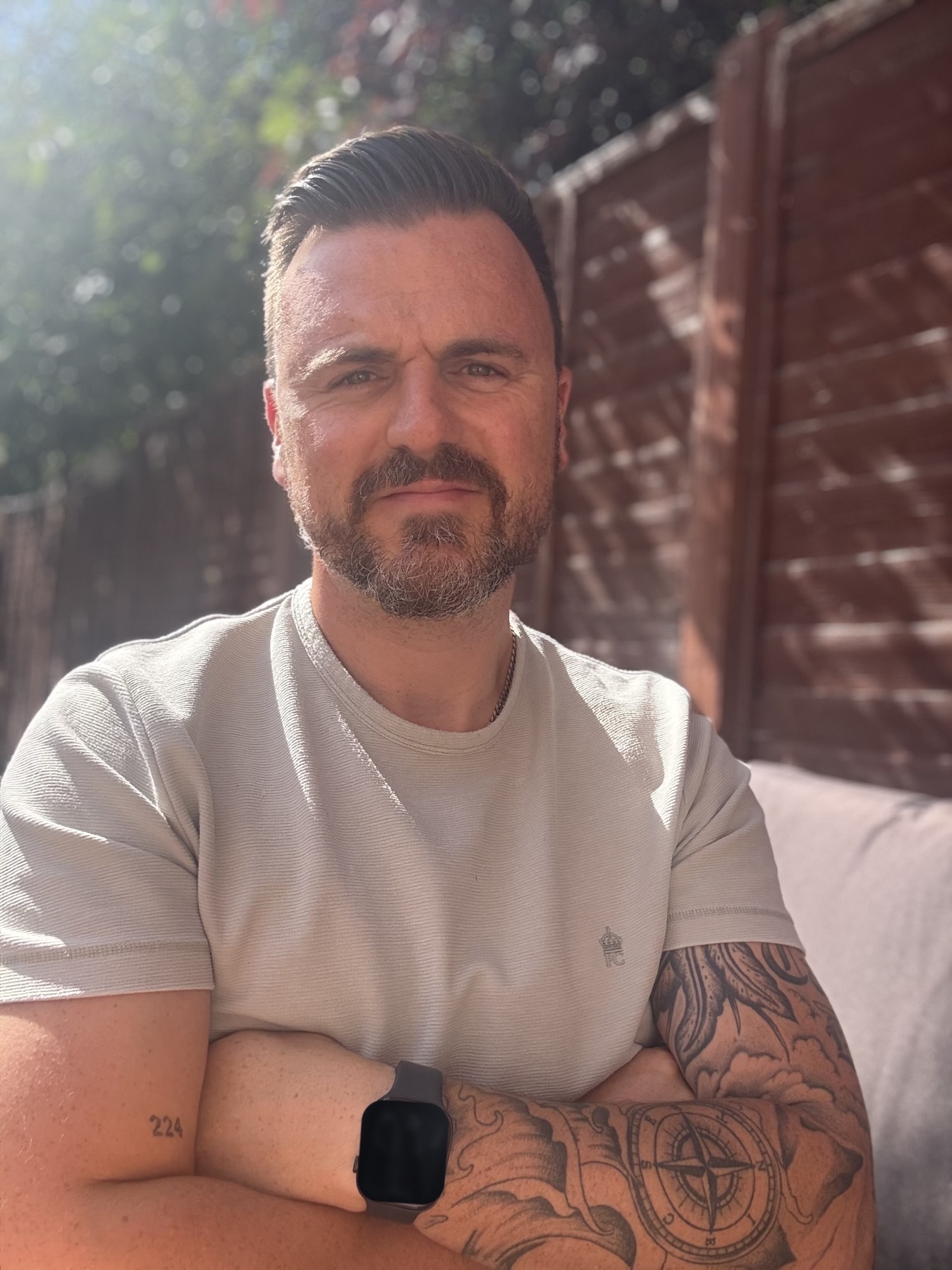
Hi, I’m Sam Olliver.
Twenty-four years in property, from negotiator up to regional director for the South Coast. I have sat where you are sitting.
Change, growth and integration6
Systems and data7
Finance5
People5
People who’ve seen it up close.
“What sets Sam apart is his rare ability to translate deep, lived experience of the property market into sharp, actionable insight. He understood the landscape we were building for immediately and contributed meaningfully to how we framed the platform’s core logic. If you’re looking for strategic counsel or domain expertise in the property space, I’d recommend Sam without hesitation.”

“He’s very techie-minded and put it to good use, building the dashboards, automations and workflows that kept everything joined up and took hours of manual work off the team. If you want someone who can look at how a business runs and make it work better, I’d recommend him without hesitation.”

“I met Sam when we (Lomond) agreed to purchase Michael Jones & Co. He was heading up the central property management functions. I was immediately impressed with how he had structured the department and his approach and knowledge of the various systems was very evident. He clearly knows his stuff when it comes to lettings and management.”

“Sam was a joy to work with. The consummate professional, knowledgeable, friendly and forward thinking. A credit to any lettings and property management outfit.”

across six areas
See exactly where your business is leaking time and money.
The Operations Scorecard scores six areas of how your business runs and names the single biggest leak holding you back. The animation shows what you get before you start: a few of the questions, then the read it builds. The Scorecard itself is free, takes about 3 minutes, and your portal populates the moment you finish.
What else do you need to know?
Why does my business feel like it all depends on me?
Because the way the business runs routes everything back through you. Work is not being captured, tracked or moved cleanly, so every exception, every decision and every follow-up lands on your desk. That is a structural problem, not a personal failing, and it is the most common reason an owner-led business plateaus. The fix is not working harder or delegating more, it is changing the structure: decisions move closer to the work, each outcome has a named owner who is not you, and the information each role needs arrives without you forwarding it. Done properly, the business holds the same standard when you step away.
My team are doing the work, so why do clients still chase us?
Because doing the work and being seen to do it are two different things, and only one of them reaches the client. A job can be raised, allocated, attended and closed without a single one of those steps being visible outside the business, so the landlord or leaseholder does what anyone would do and rings to ask. That call creates another call, and the team lose hours answering for work they have already done. The fix is not a “we are still on it” message on a timer, which makes it worse and keeps firing when nothing is actually happening. It is updates derived from real events in your own systems, so the client hears at each genuine step and stops needing to ask. This is where the largest recoverable cost usually sits, because silence is what makes clients leave without ever making a complaint.
What happens when the person who knows how it all works leaves?
In most property businesses, quite a lot breaks, and nobody finds out for weeks. Inspections, insurance renewals, a client relationship or a spreadsheet that quietly held the month together turn out to have been one person rather than one process. The tractable half of this is authority: writing down who can decide what, up to what value, so decisions are pre-authorised rather than waiting on an individual. The rest is making sure every recurring outcome has a role against it and a written way of doing it, so the next person can pick it up from the file instead of from the person who has gone.
Will this mean replacing my CRM?
Usually not. Most firms already own more capability than they use, and swapping systems is the most expensive and disruptive answer available, so it is the last one I reach for. I look at what you have, what it can actually do, and what is being done by hand around it. Often the answer is to configure what is already paid for, join two systems that are not talking, and take out the manual step in between. If a tool genuinely cannot do the job, I will say so and tell you what to replace it with. What I will not do is sell you a migration you do not need.
We pay for software nobody really uses. Is sorting that out part of this?
Yes, and it is often the fastest money back. It is very common to find a system that was bought, part-configured and forgotten, a licence count set higher than the number of people using it, or a renewal that went through because the notice landed in a mailbox belonging to someone who had left. Working out what you own, what it costs, what it is actually doing and what it could do is part of the Audit. Some of what comes out of that is a straight saving, and some of it is capability you have already paid for and can simply switch on.
Do you work with sales and lettings, or only property management?
Sales, lettings, property management and block, and the businesses that supply them. My background is twenty-four years in property, from negotiator up to regional director for the South Coast, with 5,000 properties under management, so the day-to-day is familiar: valuation through to instruction, offer through to exchange, tenancy renewals and arrears, maintenance and contractors, compliance dates, inspections and landlord reporting. The work is the same shape in each: follow how the job really moves, find where it stalls and what that costs, then redesign it and put the tech in behind it.
What is an operations consultant?
An operations consultant looks at how a business actually runs, finds where time, cost and missed revenue are leaking, and gives the owner a plan to fix it. Not a strategist who stops at the whiteboard, and not a software vendor who sells a tool then leaves. The work is practical: sit inside the day-to-day, follow the real flow of work, and find where capacity is lost, such as duplicated admin, manual handoffs, tools that do not connect, and decisions that wait on one person. The output is a ranked set of moves with the expected impact of each, so the owner knows what to fix first and what it is worth. For an owner-led UK business, a good operations consultant pays for themselves by handing back time and turning recovered capacity into revenue.
How much does it cost?
The Operations Scorecard is free and takes 3 minutes. The Operations Audit is from £750 remote, or from £1,500 on site, and what you pay for it comes off the next stage in full. The Growth and Sale-Readiness Blueprint, which is the whole operation mapped and redesigned in writing, and Implementation and Handover, where that plan is built and handed over, are both quoted after the Audit. I price those once I know what I am looking at rather than selling a pre-packaged size. Ongoing support as a fractional COO is quoted separately.
Do you work remotely or on site?
Both. The Audit is available either way, from £750 remote or from £1,500 on site. Most discovery works remotely over video and screen-share, and a day watching the work happen in the office tells you things a call never will, so bigger pieces usually mix the two. Implementation is scoped per business.
Start with the Operations Scorecard.
Free. 3 minutes. Six operational areas, scored.